Psychosocial Hazard Surveys
Psychosocial Hazard Surveys
Stop guessing where your psychosocial risk sits. Turn what your people won't say out loud into a risk profile you can act on and evidence you can show.
Trusted by Hundreds of Leading Australian Businesses







Consult your workforce. Get a risk profile back.

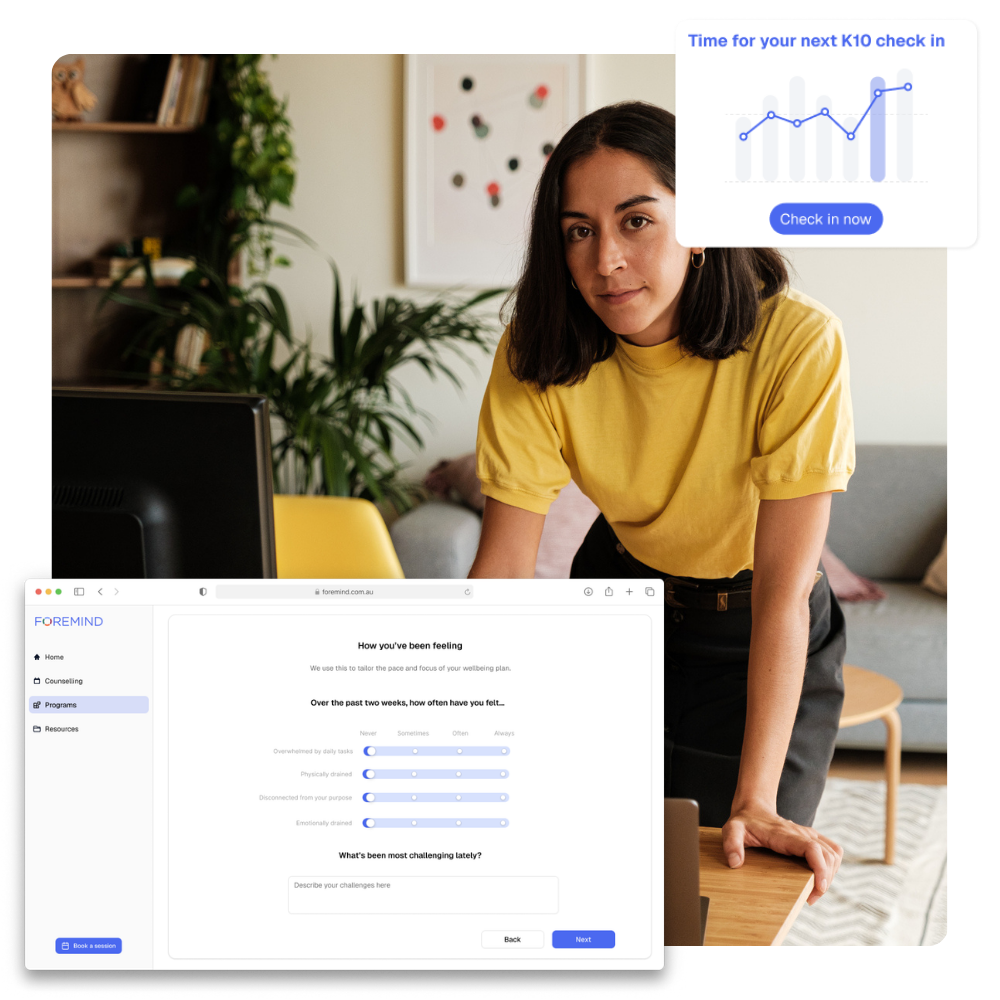
Foremind's anonymous hazard survey goes out to your existing employee list on a date you choose.
Staff answer honestly because nothing is traced back to them.
You get a de-identified report covering every mandated hazard domain, with your key focus areas and recommendations and a documented record that you consulted.
Insight without the admin

Staff complete a purpose-built survey covering every hazard domain in the Code of Practice - plain language, under 20 minutes, no jargon to decode.
It goes out automatically to your existing employee list on whatever date you set. No new tools, no manual distribution, and no chasing.
You get back a de-identified outcomes report with your results, key focus areas and recommendations - ready to feed straight into your risk assessment.

Measure progress, not just risks

Run the survey once a year and you get more than a snapshot. You get a measurable view of whether your controls are actually working, and where new risks are surfacing.
Compare results year on year to validate what's making a difference and change what isn't.
Your survey data sits alongside your incidents, assessments and controls in the same platform - so consultation isn't a separate exercise you have to evidence separately.
Ready to survey your team?
WHS law requires you to consult your workers on psychosocial hazards and undocumented conversations are hard to rely on when a regulator or insurer asks for proof.
Foremind's survey takes 20 minutes of your team's time, covers every hazard domain in the Code of Practice, and comes back as a de-identified report you can act on.
It runs inside the platform already holding your incidents, controls and counselling data.
Anonymous by design
Results come back in aggregate. Nobody can be identified from what they said.
Built for the Code of Practice
Every mandated hazard domain, plain language, under 20 minutes.
Evidence you consulted
A dated record of what you asked and what you did about it.
How does your organisation perform on psychosocial safety?
Do your employees and leadership team understand what psychosocial safety means?
Do you know what psychosocial hazards exist in your organisation?
Are these hazards documented?
On a scale of 0–5, how actively does leadership promote psychosocial safety?
Is there a process to consult your workforce about psychosocial hazards?
Is psychosocial safety regularly monitored and reviewed in your organisation?
Your results are ready.
Fill in your details and we’ll show your score, what band your organisation falls into, and what it means for your WHS obligations.
Result heading
Result description.
Get in touch with our team.
Client testimonials

Deborah Lockart
Manager of Risk & Compliance RHM Consultants
It is an absolute win for our industry that Foremind are advocating, leading and delivering a much needed service. What is even better is that they do it meaningfully and with passion

Chris Morgan
General Manager, People & Culture, Morcare Services Pty. Ltd.
We've been with Foremind a little over 12 months and our experience has been excellent. The feedback from our employees who use the platform and counselling services has been positive, and the Foremind team are easy to deal with and very accommodating of requests.
Bebhinn Forde
Max Build, Head of People and Culture
I've been using Foremind as the EAP provider for +3 years now and have had a really positive experience. While they may be a smaller player compared to some of the larger global providers, the quality of service is absolutely comparable. The platform is intuitive, the support offering is strong, and the overall experience for employees has been consistently positive.

Jill Brown
Chief Executive Officer, LGPro VIC
We've had a very positive experience working with Foremind as our Employee Assistance Program provider. The platform is easy to navigate, onboarding was smooth, and the team is responsive and supportive. The addition of holistic services has strengthened the offering and provides meaningful, practical support for our staff.

Janelle D'Arcy
Head of People & Culture, WBP Group
A modern & proactive view of mental health exists that is refreshing to see. Great resources exist on their platform & informative & practical webinars are offered that always hit the mark. Also, easy to deal with in a way that feels like a partnership not a provider/client relationship.

Kim Bush
Director of Workforce and Culture, Beaufort & Skipton Health Service
Foremind provides comprehensive and easy access for our team. The volume and scope of resources is exceptional and booking a session is inviting for those who need it.
Jo Livingston
Indesco HR Manager
Foremind provides a very personal, responsive service and has a wide range of resources available to support our employees. The personal approach Joel and the team add shows they understand the industry and best ways to support workers inside of it.

Fiona Harrop
Director of Operations & Transformation, UnLtd
Foremind has been easy to navigate, both for our team and from an admin perspective. It's simple to onboard new team members quickly and efficientl. Those who have used the platform have been very positive - calling out how useful it is and how easy it is to access and engage with the support available.

Georgina Byron
CEO at The Snow Foundation
Foremind’s work is inspirational. We are all interested in improving positive mindsets and wellbeing.. and workers don’t always have the opportunity to have that wellbeing check in. There’s not that culture of putting your hand up and saying you’re not okay.
Fiona Parson
Owner, Spotted Frog Kindergarten
I've noticed that the team's morale has been at an all-time high this year, and I think a lot of that has come from having a service like Foremind in place.

Phil Cameron
Area Environmental Managing Director
Ive been able to visibly notice a change in energy and productivity in the office since engaging Foremind, the onboarding and initial training were so fantastic we decided to do it quarterly.
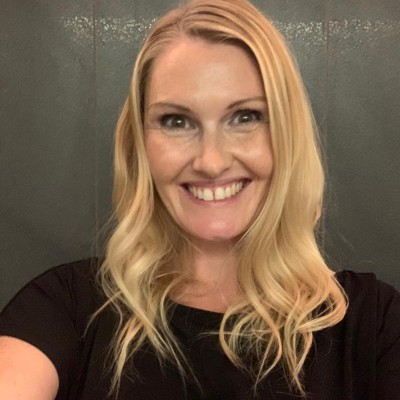
Abbey Suter
Business Owner, Acacia Ridge Pet Resort
We have worked with foremind for 12 months to assist in supporting our staff and it's been an asset for our business. Recommended resource!

Natasha Tufenkjian
HR Manager, Fighting Chance
The counselling service has been amazing, and our employees have been super impressed by their sessions

George Chukwukezie
HR Manager, Vacenti
Having the ability to provide support for our staff has been really beneficial. The feedback we always hear is how easy it is to book a session. They can go in, look at who is available and book it in quickly. It's been really great.
It is an absolute win for our industry that Foremind are advocating, leading and delivering a much needed service. What is even better is that they do it meaningfully and with passion
We've been with Foremind a little over 12 months and our experience has been excellent. The feedback from our employees who use the platform and counselling services has been positive, and the Foremind team are easy to deal with and very accommodating of requests.
I've been using Foremind as the EAP provider for +3 years now and have had a really positive experience. While they may be a smaller player compared to some of the larger global providers, the quality of service is absolutely comparable. The platform is intuitive, the support offering is strong, and the overall experience for employees has been consistently positive.
We've had a very positive experience working with Foremind as our Employee Assistance Program provider. The platform is easy to navigate, onboarding was smooth, and the team is responsive and supportive. The addition of holistic services has strengthened the offering and provides meaningful, practical support for our staff.
A modern & proactive view of mental health exists that is refreshing to see. Great resources exist on their platform & informative & practical webinars are offered that always hit the mark. Also, easy to deal with in a way that feels like a partnership not a provider/client relationship.
Foremind provides comprehensive and easy access for our team. The volume and scope of resources is exceptional and booking a session is inviting for those who need it.
Foremind provides a very personal, responsive service and has a wide range of resources available to support our employees. The personal approach Joel and the team add shows they understand the industry and best ways to support workers inside of it.
Foremind has been easy to navigate, both for our team and from an admin perspective. It's simple to onboard new team members quickly and efficientl. Those who have used the platform have been very positive - calling out how useful it is and how easy it is to access and engage with the support available.
Foremind’s work is inspirational. We are all interested in improving positive mindsets and wellbeing.. and workers don’t always have the opportunity to have that wellbeing check in. There’s not that culture of putting your hand up and saying you’re not okay.
I've noticed that the team's morale has been at an all-time high this year, and I think a lot of that has come from having a service like Foremind in place.
Ive been able to visibly notice a change in energy and productivity in the office since engaging Foremind, the onboarding and initial training were so fantastic we decided to do it quarterly.
We have worked with foremind for 12 months to assist in supporting our staff and it's been an asset for our business. Recommended resource!
The counselling service has been amazing, and our employees have been super impressed by their sessions
Having the ability to provide support for our staff has been really beneficial. The feedback we always hear is how easy it is to book a session. They can go in, look at who is available and book it in quickly. It's been really great.
Answers to the frequently asked questions.
What's the difference between a psychosocial hazard survey and an engagement survey?+
Engagement surveys measure how staff feel about their job. Psychosocial hazard surveys identify specific workplace conditions - workload, bullying, lack of role clarity, poor support - that create legal risk under Australian WHS legislation. One is a culture tool. The other is a compliance obligation.
What is the K-10 and do we need to use it?+
The K-10 is a standardised psychological distress scale. It measures how staff are feeling at a clinical level. It can be useful for baseline measurement, but it isn't the only option - and for many workplaces, regular anonymous check-ins that track trends over time are more actionable than a clinical score alone.
What happens if results show a serious issue?+
The survey surfaces the pattern. From there you can log it as a psychosocial hazard, assign a control measure, and track whether the intervention actually made a difference - all in the same platform.
How do survey results connect to the rest of the platform?+
Check-in and survey data feeds into your analytics dashboard alongside incident reports and counselling data. If a team flags elevated workload and bookings spike the following week, you see both connected - not in separate systems. The survey is the early signal. The platform is what you do with it.
Got 20 mins to see if Foremind suits your site?
Not ready to talk? Fair play.
Download our one-pager to share with your team first.