On Demand Resources
Resource support library
A library of audio, video, and written resources covering mental health, workplace stress, lived experiences, and practical tools.
.jpg)
Trusted by Hundreds of Leading Australian Businesses







Not everyone asks for help the same way
.jpg)
In high-stigma industries, most staff reach breaking point before they ask for help - because there was nothing in between "doing fine" and needing a counsellor.
Foremind's resource library sits in that gap. Audio, video, and written content on stress, burnout, and lived experience - available any time, no name required.
For staff not ready to talk, it's the first step.
Topics for whatever they're carrying

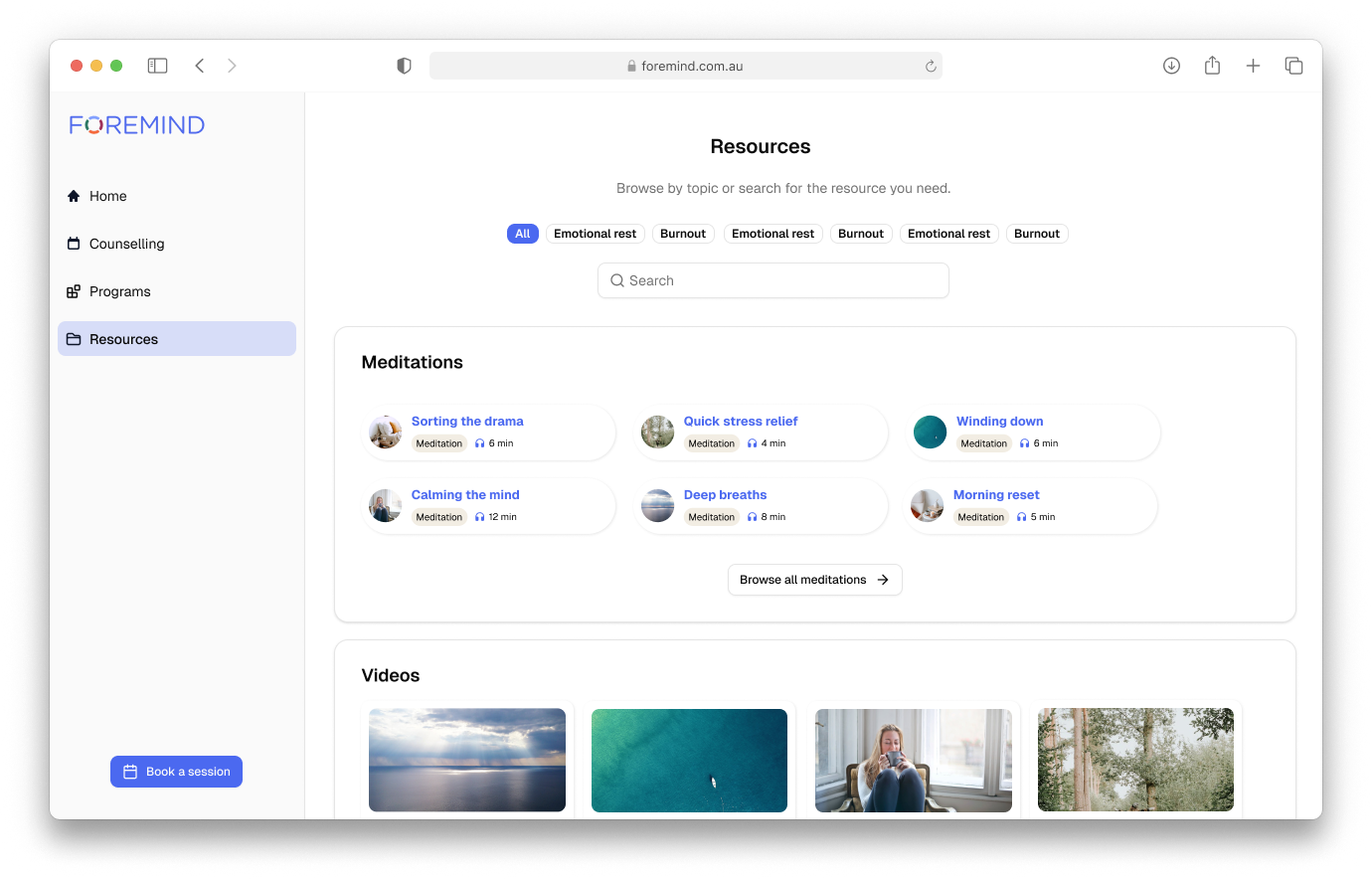
Stress and burnout. Sleep. Money worries. Relationships. Lived-experience stories from people in the same industry.
Someone dreading Monday and someone three months into a bad patch aren't looking for the same thing - the library covers both ends.
Expert-led content, updated regularly, in plain language.
Client testimonials

Deborah Lockart
Manager of Risk & Compliance RHM Consultants
It is an absolute win for our industry that Foremind are advocating, leading and delivering a much needed service. What is even better is that they do it meaningfully and with passion

Chris Morgan
General Manager, People & Culture, Morcare Services Pty. Ltd.
We've been with Foremind a little over 12 months and our experience has been excellent. The feedback from our employees who use the platform and counselling services has been positive, and the Foremind team are easy to deal with and very accommodating of requests.

Bebhinn Forde
Max Build, Head of People and Culture
I've been using Foremind as the EAP provider for +3 years now and have had a really positive experience. While they may be a smaller player compared to some of the larger global providers, the quality of service is absolutely comparable. The platform is intuitive, the support offering is strong, and the overall experience for employees has been consistently positive.

Jill Brown
Chief Executive Officer, LGPro VIC
We've had a very positive experience working with Foremind as our Employee Assistance Program provider. The platform is easy to navigate, onboarding was smooth, and the team is responsive and supportive. The addition of holistic services has strengthened the offering and provides meaningful, practical support for our staff.

Janelle D'Arcy
Head of People & Culture, WBP Group
A modern & proactive view of mental health exists that is refreshing to see. Great resources exist on their platform & informative & practical webinars are offered that always hit the mark. Also, easy to deal with in a way that feels like a partnership not a provider/client relationship.

Kim Bush
Director of Workforce and Culture, Beaufort & Skipton Health Service
Foremind provides comprehensive and easy access for our team. The volume and scope of resources is exceptional and booking a session is inviting for those who need it.
Jo Livingston
Indesco HR Manager
Foremind provides a very personal, responsive service and has a wide range of resources available to support our employees. The personal approach Joel and the team add shows they understand the industry and best ways to support workers inside of it.

Fiona Harrop
Director of Operations & Transformation, UnLtd
Foremind has been easy to navigate, both for our team and from an admin perspective. It's simple to onboard new team members quickly and efficientl. Those who have used the platform have been very positive - calling out how useful it is and how easy it is to access and engage with the support available.

Georgina Byron
CEO at The Snow Foundation
Foremind’s work is inspirational. We are all interested in improving positive mindsets and wellbeing.. and workers don’t always have the opportunity to have that wellbeing check in. There’s not that culture of putting your hand up and saying you’re not okay.

Fiona Parson
Owner, Spotted Frog Kindergarten
I've noticed that the team's morale has been at an all-time high this year, and I think a lot of that has come from having a service like Foremind in place.

Phil Cameron
Area Environmental Managing Director
Ive been able to visibly notice a change in energy and productivity in the office since engaging Foremind, the onboarding and initial training were so fantastic we decided to do it quarterly.

Abbey Suter
Business Owner, Acacia Ridge Pet Resort
We have worked with foremind for 12 months to assist in supporting our staff and it's been an asset for our business. Recommended resource!

Natasha Tufenkjian
HR Manager, Fighting Chance
The counselling service has been amazing, and our employees have been super impressed by their sessions

George Chukwukezie
HR Manager, Vacenti
Having the ability to provide support for our staff has been really beneficial. The feedback we always hear is how easy it is to book a session. They can go in, look at who is available and book it in quickly. It's been really great.

It is an absolute win for our industry that Foremind are advocating, leading and delivering a much needed service. What is even better is that they do it meaningfully and with passion
We've been with Foremind a little over 12 months and our experience has been excellent. The feedback from our employees who use the platform and counselling services has been positive, and the Foremind team are easy to deal with and very accommodating of requests.
I've been using Foremind as the EAP provider for +3 years now and have had a really positive experience. While they may be a smaller player compared to some of the larger global providers, the quality of service is absolutely comparable. The platform is intuitive, the support offering is strong, and the overall experience for employees has been consistently positive.
We've had a very positive experience working with Foremind as our Employee Assistance Program provider. The platform is easy to navigate, onboarding was smooth, and the team is responsive and supportive. The addition of holistic services has strengthened the offering and provides meaningful, practical support for our staff.
A modern & proactive view of mental health exists that is refreshing to see. Great resources exist on their platform & informative & practical webinars are offered that always hit the mark. Also, easy to deal with in a way that feels like a partnership not a provider/client relationship.
Foremind provides comprehensive and easy access for our team. The volume and scope of resources is exceptional and booking a session is inviting for those who need it.
Foremind provides a very personal, responsive service and has a wide range of resources available to support our employees. The personal approach Joel and the team add shows they understand the industry and best ways to support workers inside of it.
Foremind has been easy to navigate, both for our team and from an admin perspective. It's simple to onboard new team members quickly and efficientl. Those who have used the platform have been very positive - calling out how useful it is and how easy it is to access and engage with the support available.
Foremind’s work is inspirational. We are all interested in improving positive mindsets and wellbeing.. and workers don’t always have the opportunity to have that wellbeing check in. There’s not that culture of putting your hand up and saying you’re not okay.
I've noticed that the team's morale has been at an all-time high this year, and I think a lot of that has come from having a service like Foremind in place.
Ive been able to visibly notice a change in energy and productivity in the office since engaging Foremind, the onboarding and initial training were so fantastic we decided to do it quarterly.
We have worked with foremind for 12 months to assist in supporting our staff and it's been an asset for our business. Recommended resource!
The counselling service has been amazing, and our employees have been super impressed by their sessions
Having the ability to provide support for our staff has been really beneficial. The feedback we always hear is how easy it is to book a session. They can go in, look at who is available and book it in quickly. It's been really great.
Formats to suit your people
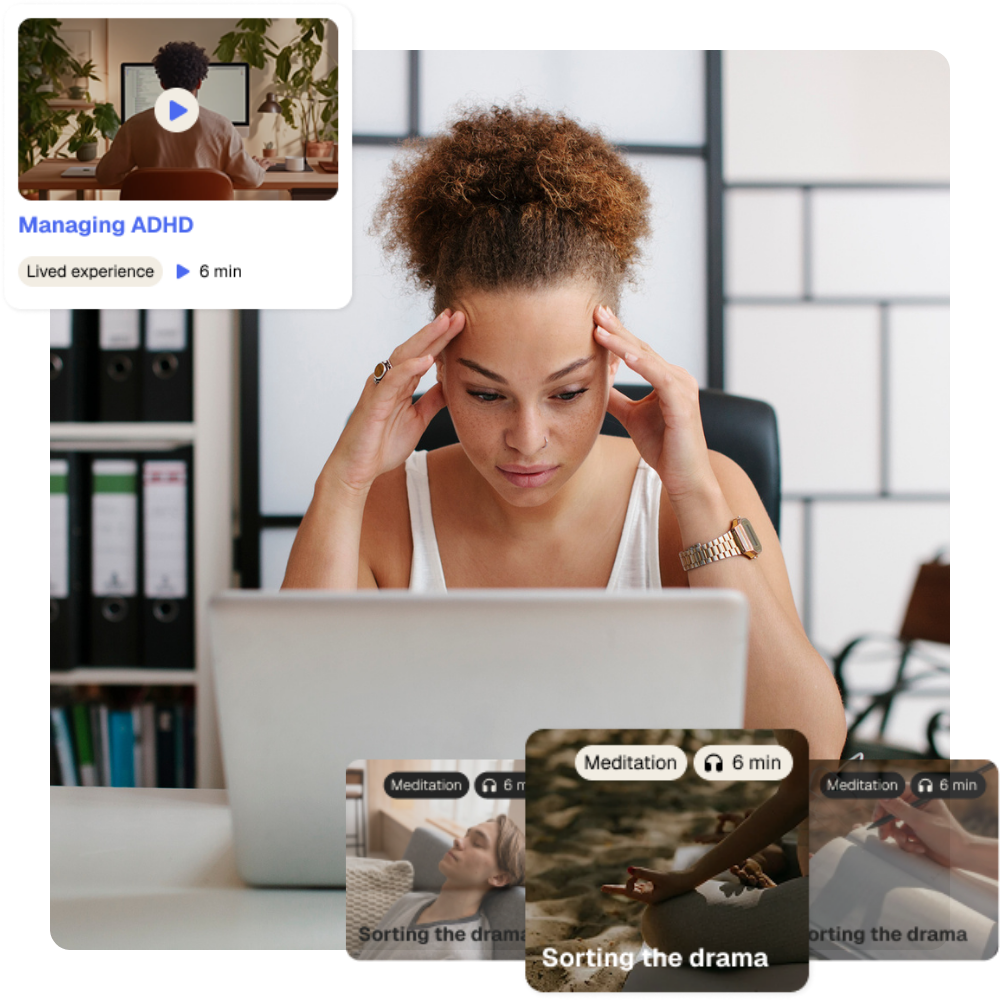
Some want something to listen to on the drive home. Some want to watch someone describe exactly what they're going through. Some just want to read quietly, without anyone knowing.
Audio tools and guided meditations. Real stories and expert-led video. Written guides and practical worksheets.
Whatever format works, it's there when they need it.
Whenever they need it
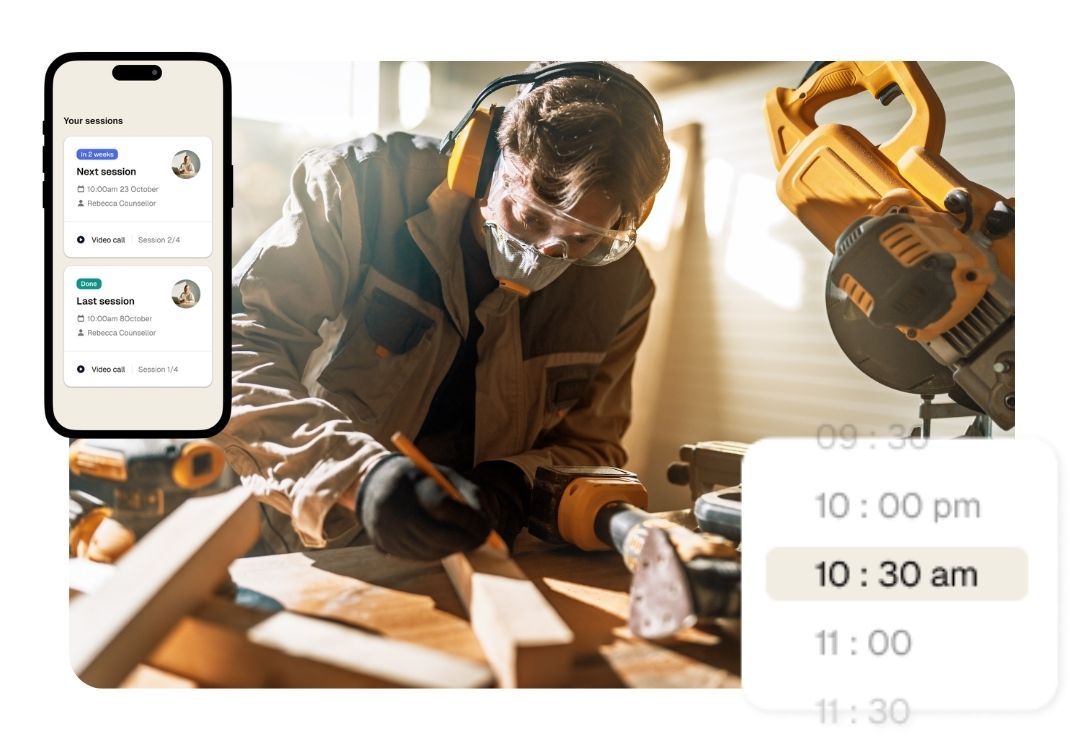
Low EAP utilisation isn't always a platform problem. Sometimes staff simply aren't at the point where booking a counsellor feels like the right move.
The library meets them before that point - 24/7, no approval, no record of what was accessed.
A rough shift, a bad week, a 2am spiral. Support without putting your name to anything.
Answers to the frequently asked questions.
Our last EAP was barely touched. Why would this be different?+
Most EAPs go unused because of how they're accessed, not because staff don't need them. Phoning a stranger, explaining yourself, then waiting weeks is enough to stop most people before they start. Foremind removes all three steps: staff see real counsellor profiles, pick someone themselves, and book the same day.
If you already have a provider, the question worth asking is what your current utilisation is. Most traditional EAPs sit in low single digits, which means you're paying for cover your people aren't reaching. If yours is being used, staff can get seen quickly, and it covers your psychosocial obligations, there's no reason to move. If not, it's worth knowing what you're getting for the spend.
Do you offer 24/7 support?+
Yes. A 24/7 after-hours crisis line means staff can reach someone immediately at any hour, including nights and weekends.
Counselling appointments are also available outside standard business hours, so shift-based and on-call teams aren't limited to a nine-to-five window. Those are two different things, and it's worth checking any provider offers both rather than just the crisis line.
Are your EAP counsellors based in Australia?+
Yes. Every practitioner on the platform holds current membership with an Australian professional body and practises under Australian standards, codes of ethics and disciplinary frameworks. There are no offshore call centres.
Practitioners hold membership with the Australian Counselling Association, the Psychotherapy and Counselling Federation of Australia, or the Australian Association of Social Workers, along with a current Working with Children or Vulnerable People Check.
How much does an EAP cost?+
Pricing is usually per employee per month, based on total headcount rather than how many people use the service. Costs vary widely depending on whether sessions are bundled in and whether compliance tooling is included.
A more useful comparison is cost per employee who actually uses it. An EAP with 2% utilisation can work out several times more expensive per person helped than one that gets used. Foremind offers pay-as-you-go, inclusive session plans and compliance-inclusive plans, with discounted pricing for not-for-profits and charities.
For full breakdown of our plans, see our EAP pricing page or request a quote for a tailored proposal.
What information does an employer receive about EAP usage?+
Nothing that could identify anyone. All counselling is completely confidential and all reporting is anonymous - you'll never see who booked, when, or what was discussed.
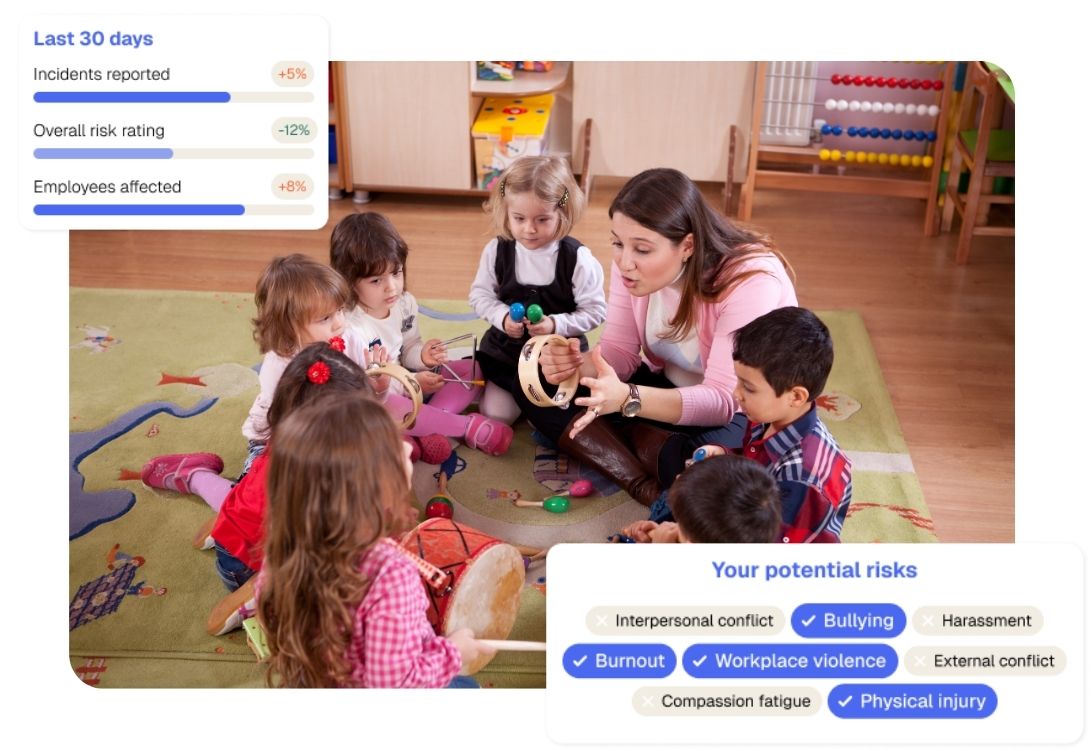
What you do see is the aggregated picture: how many people are using it, what psychosocial risks are prevalent in the business, and which teams are under pressure. Enough to know the investment is working and where to act, never enough to identify a person. Reporting thresholds mean small teams can't be reverse-engineered from the data.
Does having an EAP meet an employer's psychosocial duty of care?+
No. An EAP is a control measure, and a valuable one, but it only addresses harm after it has occurred. It doesn't identify hazards, assess risk, or evidence that controls are working.
Australian WHS law requires you to identify psychosocial hazards, assess the risk, control it so far as is reasonably practicable, and review whether those controls are working — with documented evidence at each step. Offering counselling on its own leaves three of those four steps undocumented.
Foremind covers both in one platform. See how the compliance side works in our product tour.
Got 20 mins to see if Foremind suits your site?

Not ready to talk? Fair play.
Download our one-pager to share with your team first.