Mental health & psychosocial hazards training
Give your leaders and your workforce the skills to spot risk early, talk about it properly, and know what to do next.

Trainings for mentally safer workplaces
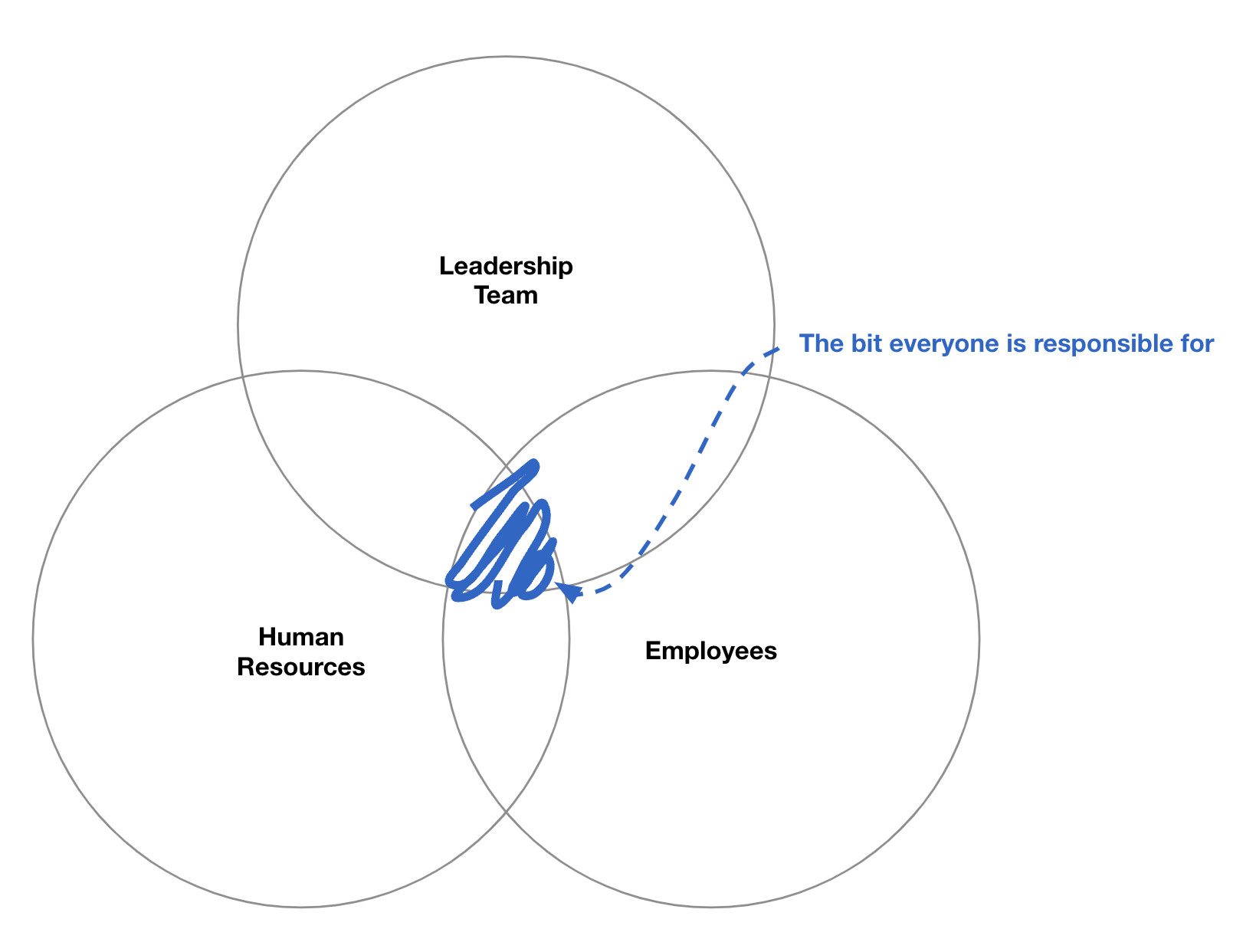
Psychosocial risk isn't owned by one team, and training that only reaches leadership rarely changes much.
Leaders need to recognise hazards and understand their duties under WHS law. HR needs a consistent framework to work from. Employees need to know what the hazards are and how to raise them.
Our psychosocial hazards and workplace mental health training is built for Australian workplaces and aligned to the Code of Practice.
Workplace Mental Health Training for Leaders
Most managers want to support their team but aren't sure what to say, when to step in, or where the line sits between being helpful and overstepping.
This session gives them a practical framework: what to look for, how to open the conversation, and how to hand over to the right support without carrying it themselves.
Format: 1 hour · Virtual or In-Person · Up to 20 people
Key outcomes
Spot early signs of distress before small issues become costly ones
Lead difficult conversations using tools they can apply immediately
Reduce stigma, and understand the part they personally play in it
Connect people to the right support at the right time
Psychosocial Health & Safety for Leaders
Psychosocial hazards are now managed the same way as physical ones: identify, assess, control, review.
Most leaders have never been walked through what that looks like in practice. This session covers the risk management process end to end, grounded in real case studies, so leaders understand both their legal duties and the day-to-day behaviours that create or reduce risk.
Format: 1 hour · Virtual or In-Person · Up to 20 people
Key outcomes
Identify psychosocial hazards before they become safety or compliance issues
Apply the risk management process - identify, assess, control, monitor, review
Understand their role in building a psychologically safe workplace
Talk to staff about psychosocial safety in a way that builds trust
Psychosocial Health & Safety for your Workforce
Psychosocial risk management only works if the workforce is part of it. Consultation is a legal requirement, and it produces far better results when people understand what they're being asked and why.
This session gives your teams a plain-language grounding in the 17 hazards, what non-compliance actually costs, and how their input shapes the controls that follow.
Format: 1 hour · Virtual · Up to 20 people
Key outcomes
Recognise the 17 psychosocial hazards and why they matter
Understand the real cost of non-compliance, for the business and for them
See how consultation works, through surveys and focus groups
Contribute to controls that reflect what's actually happening on the ground
Unfortunately in a lot of situations, stress starts at the top and trickles down to the rest of an organisation.
It is critically important to not only train and educate your workers when it comes to mental health and wellbeing but leaders need to be aware of the impacts of their behaviour on the people underneath them.
Controls only work if people use them
You can have the policy, the risk register and the reporting tool in place and still have a leader who avoids the conversation, or a team that doesn't recognise a hazard when they're standing in one.
Training is what turns a documented control into an actual one, and it's evidence in its own right.
WHS law requires you to give workers information, training or instruction on the psychosocial hazards at your workplace and the controls used to manage them.
It won't cover your obligations on its own - work design and systems come first - but it's part of the duty either way.
Not sure where your obligations sit? Have a chat with us and we'll walk you through it.
Answers to the frequently asked questions.
Our last EAP was barely touched. Why would this be different?+
Most EAPs go unused because of how they're accessed, not because staff don't need them. Phoning a stranger, explaining yourself, then waiting weeks is enough to stop most people before they start. Foremind removes all three steps: staff see real counsellor profiles, pick someone themselves, and book the same day.
If you already have a provider, the question worth asking is what your current utilisation is. Most traditional EAPs sit in low single digits, which means you're paying for cover your people aren't reaching. If yours is being used, staff can get seen quickly, and it covers your psychosocial obligations, there's no reason to move. If not, it's worth knowing what you're getting for the spend.
Do you offer 24/7 support?+
Yes. A 24/7 after-hours crisis line means staff can reach someone immediately at any hour, including nights and weekends.
Counselling appointments are also available outside standard business hours, so shift-based and on-call teams aren't limited to a nine-to-five window. Those are two different things, and it's worth checking any provider offers both rather than just the crisis line.
Are your EAP counsellors based in Australia?+
Yes. Every practitioner on the platform holds current membership with an Australian professional body and practises under Australian standards, codes of ethics and disciplinary frameworks. There are no offshore call centres.
Practitioners hold membership with the Australian Counselling Association, the Psychotherapy and Counselling Federation of Australia, or the Australian Association of Social Workers, along with a current Working with Children or Vulnerable People Check.
How much does an EAP cost?+
Pricing is usually per employee per month, based on total headcount rather than how many people use the service. Costs vary widely depending on whether sessions are bundled in and whether compliance tooling is included.
A more useful comparison is cost per employee who actually uses it. An EAP with 2% utilisation can work out several times more expensive per person helped than one that gets used. Foremind offers pay-as-you-go, inclusive session plans and compliance-inclusive plans, with discounted pricing for not-for-profits and charities.
For full breakdown of our plans, see our EAP pricing page or request a quote for a tailored proposal.
What information does an employer receive about EAP usage?+
Nothing that could identify anyone. All counselling is completely confidential and all reporting is anonymous - you'll never see who booked, when, or what was discussed.
What you do see is the aggregated picture: how many people are using it, what psychosocial risks are prevalent in the business, and which teams are under pressure. Enough to know the investment is working and where to act, never enough to identify a person. Reporting thresholds mean small teams can't be reverse-engineered from the data.
Does having an EAP meet an employer's psychosocial duty of care?+
No. An EAP is a control measure, and a valuable one, but it only addresses harm after it has occurred. It doesn't identify hazards, assess risk, or evidence that controls are working.
Australian WHS law requires you to identify psychosocial hazards, assess the risk, control it so far as is reasonably practicable, and review whether those controls are working — with documented evidence at each step. Offering counselling on its own leaves three of those four steps undocumented.
Foremind covers both in one platform. See how the compliance side works in our product tour.
See how Foremind suits your team

Not ready to talk? Fair play.
Download our one-pager to share with your team first.