
What Is Mental Health First Aid?
Mental Health First Aid teaches people how to recognise, respond to, and support someone experiencing a mental health problem

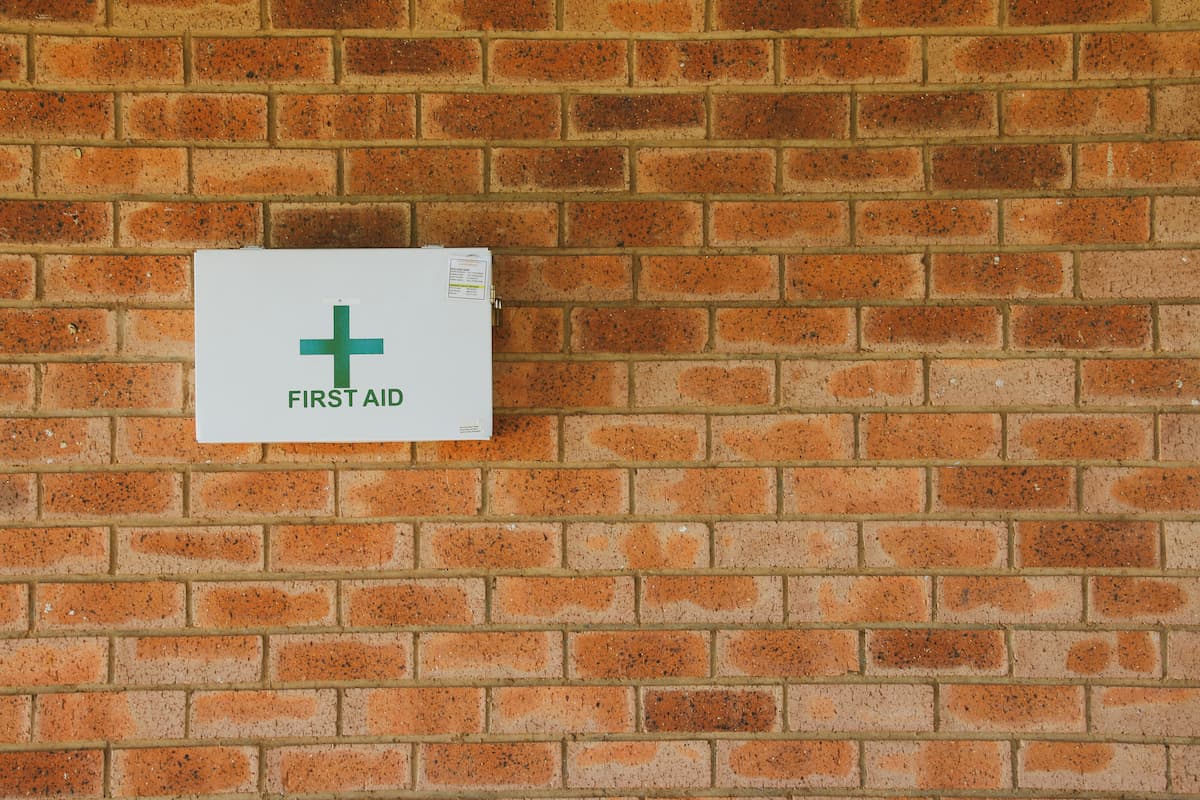
- MHFA is a structured first-response framework for mental health problems and crises
- It bridges the gap until professional help arrives; it isn't treatment
- ALGEE is the core action plan taught in all accredited Australian courses
- No clinical background needed; Standard, Youth and Workplace course formats available

Download our guide to managing your teams mental health
What Is Mental Health First Aid?
Mental Health First Aid (MHFA) is a structured first-response framework that teaches people how to recognise, respond to, and support someone who is developing a mental health problem or experiencing a mental health crisis.
Just as physical first aid equips people to provide immediate care for a physical injury before professional medical help arrives, MHFA equips people to provide immediate, evidence-based support for a mental health emergency before a clinician can step in.
The program was developed in Australia in 2000 and is now delivered in more than 25 countries. In Australia, accredited MHFA courses are delivered by instructors trained and certified by Mental Health First Aid Australia, the national body responsible for training standards and course accreditation.
MHFA is not therapy and it is not diagnosis. It is the practical, human response that happens in the moment - a colleague noticing the signs, a manager knowing what to say, a workmate making the call that connects someone to the help they need.
What Mental Health Conditions Does MHFA Cover?
MHFA training equips people to recognise and respond to a broad range of mental health problems, not just acute crises. Accredited courses in Australia cover the following conditions and crisis situations.
Mental health problems:
- Depression
- Burnout
- Anxiety disorders
- Psychosis
- Post-Traumatic Stress Disorder (PTSD)
- Eating disorders
- Substance use disorders
- Gambling-related harm
See our guide to identifying signs on employee burnout.
Mental health crises:
- Suicidal thoughts and behaviours
- Non-suicidal self-injury (sometimes called deliberate self-harm)
- Panic attacks
- Traumatic events and acute stress reactions
- Severe psychotic states
- Aggressive or agitated behaviour
- Severe effects from alcohol or other drug use
Understanding this breadth matters for employers. The conditions MHFA covers are precisely the ones that psychosocial hazard assessments identify as contributing to psychological injury at work - including high job demands, poor support, and exposure to traumatic events or material.
What Is the ALGEE Action Plan?
The ALGEE action plan is the core evidence-based framework taught in all accredited MHFA courses. It gives first aiders a clear, memorable sequence for responding to someone in distress, reducing the paralysis that often comes from not knowing what to say or do.
Each step of ALGEE works as follows.
A - Approach the person, assess, and assist with any crisis
Choose a private, comfortable setting and a calm moment. Be direct and honest: say you have noticed something seems off and you are there to help. If the person appears to be in immediate danger, that takes priority over everything else — call Triple Zero (000).
L - Listen non-judgmentally
Give the person your full attention. Do not interrupt, minimise, or offer quick fixes. Use open body language and brief verbal acknowledgements to signal that you are genuinely engaged. Avoid phrases like "snap out of it" or "it could be worse."
G - Give reassurance and information
Acknowledge that what the person is experiencing is real and serious. Share accurate, straightforward information about the support options available. Avoid diagnosing or speculating about what is wrong — your role is to support, not assess.
E- Encourage appropriate professional help
Gently guide the person toward professional support. This might be a GP, a psychologist, a counsellor, or an Employee Assistance Program. If the person is reluctant, acknowledge that and explore the reasons rather than pushing.
E - Encourage other supports
Professional help is not the only resource. Encourage the person to draw on trusted friends, family, community supports, and self-care strategies. A support network around a person significantly improves recovery outcomes.
What Are the Signs of a Mental Health Crisis?
The warning signs of a mental health problem are often quiet rather than dramatic. Look for patterns of change that are out of character for the person and have persisted over weeks rather than days - no single sign is conclusive on its own.
- Marked changes in mood, energy, or personality that last more than two weeks
- Withdrawal from colleagues, friends, or social activities
- Significant drop in performance at work or difficulty concentrating
- Neglect of personal appearance, hygiene, or basic self-care
- Unusual or disorganised thinking and speech
- Expressions of hopelessness, worthlessness, or guilt
- Sleep disturbances or significant changes in appetite or weight
- Increased use of alcohol or other substances
- Restless, agitated, or uncharacteristically impulsive behaviour
- Statements suggesting suicidal thoughts or self-harm
No single sign confirms a mental health problem, and not everyone presents the same way. What matters is a pattern of changes that is out of character for that person.
In a workplace context, understanding signs of burnout or poor mental health can be the difference between early intervention and a psychological injury compensation claim.
Who Can Become a Mental Health First Aider?
Anyone can become a Mental Health First Aider - no prior clinical experience, qualifications, or background in health is required. MHFA training is designed for members of the general public, including employees, managers, educators, and community workers.
Certified Mental Health First Aiders do not diagnose, treat, or provide ongoing counselling. Their role is to offer immediate support, reduce the risk of harm escalating, and connect the person with appropriate professional services. Think of them as the bridge between distress and professional care - not the destination, but the critical link that gets someone there.
In Australian workplaces, having trained MHFAiders on staff is increasingly recognised as a component of a psychosocial safety system - alongside anonymous incident reporting, risk assessments, and access to an Employee Assistance Program.
Types of MHFA Courses Available in Australia
MHFA Australia accredits several course formats to suit different audiences and contexts. The main types available are as follows.
All accredited courses lead to a recognised certificate that requires renewal through a refresher course. Course providers must be accredited by MHFA Australia to issue nationally recognised certification.
Why MHFA Training Matters in the Workplace
MHFA training sits squarely within an employer's duty of care under Australian WHS legislation. According to the National Study of Mental Health and Wellbeing, over 40% of Australians aged 16–85 have experienced a mental disorder in their lifetime - and the workplace is both a significant source of psychosocial risk and a practical venue for early intervention.
Untreated mental health problems drive employee absenteeism, presenteeism, and psychological injuries at work. Safe Work Australia's model Code of Practice identifies mental health first aid as a relevant control measure, though it is a component of a psychosocial hazard compliance framework rather than a substitute for one.
See more options for workplace mental health trainings.
How to Support Someone Experiencing a Mental Health Crisis
Following the ALGEE framework, the practical priorities are: find a private moment and approach calmly, listen without judgment and resist the urge to problem-solve, and avoid well-intentioned but unhelpful responses like telling someone to "look on the bright side."
If the person discloses suicidal thoughts, do not leave them alone. Ask directly: "Are you thinking about suicide?" — asking does not increase risk. Contact Lifeline on 13 11 14 or the Suicide Call Back Service on 1300 659 467, or call Triple Zero (000) in an immediate emergency.
After a difficult interaction, debrief with a trusted colleague or EAP counsellor — supporting someone in crisis is emotionally demanding and first aiders need support too.
Frequently Asked Questions
What is mental health first aid?
Mental Health First Aid (MHFA) is an evidence-based training program that teaches people how to recognise the signs of a mental health problem or crisis and respond supportively. It is modelled on physical first aid — providing immediate, practical support until professional help is accessed.
Who can become a Mental Health First Aider?
Anyone can complete MHFA training — no clinical background or qualifications are required. The training is designed for members of the general public, including employees, managers, educators, and community members who want to be better equipped to support those around them.
What does MHFA training teach you?
MHFA training teaches participants to recognise the signs and symptoms of common mental health conditions including depression, anxiety, psychosis, PTSD, and substance use disorders. It also covers the ALGEE action plan, crisis response techniques, how to approach a conversation about mental health, and how to connect someone with professional support.
Is MHFA training mandatory for employers in Australia?
MHFA training is not currently mandated by name in Australian WHS legislation, but employers do have a legal duty to eliminate or minimise psychosocial hazards in the workplace. Safe Work Australia's model Code of Practice on managing psychosocial hazards identifies mental health first aid as a relevant control measure. Employers in high-risk industries should consider MHFA a core component of their psychosocial hazards training and education strategy.
How long does MHFA certification last?
MHFA certification is valid for three years, after which a refresher course is required to maintain accreditation.
How does MHFA differ from seeing a psychologist?
MHFA provides immediate, non-clinical first-response support — it does not involve diagnosis, therapy, or ongoing treatment. A psychologist delivers professional, evidence-based therapeutic interventions over a series of sessions. The two work in sequence: a Mental Health First Aider responds in the moment and helps connect the person to professional care.
Can MHFA training support our psychosocial compliance obligations?
Yes. While MHFA alone does not fulfil all psychosocial compliance requirements, it is a recognised control measure under Safe Work Australia's model Code of Practice. Employers seeking a comprehensive approach need to combine MHFA with formal risk assessments, anonymous reporting channels, and access to professional mental health support through an EAP.
Foremind is an Australian workplace mental health platform that helps employers meet their psychosocial safety obligations and support their people — from anonymous incident reporting and hazard assessments through to EAP access and compliance dashboards. To learn how Foremind can support your team, visit foremind.com.au.
Related Articles
- Counsellor Vs Psychologist
- What Is A Fitness For Work Assessment?
- Examples of Worklace Psychological Safety
- What Are Psychological Injuries At Work?




Answers to the frequently asked questions.
Email us at enquiries@foremind.com.au and we'll get back to you quickly with a response
Yes, we have culturally competent counsellors available, including those able to work with first nation and CALD employees.
Onshore on secure AWS Servers in Sydney Australia. All data is encrypted in transit and at rest and our entire team is located in Australia.
Employees can access our platform on any device (mobile, laptop, desktop, etc.) as long you have the website link - no need to download any app on devices. You wouldn’t need to enrol any of your staff individually.- When we do our onboarding, we ask for the first name, last name and email of all your employees, and send out an email invite to all them which will allow them to create their own individual account to access the platform. For new staff we can also invite them or provide you with a unique link to embed in your onboarding process, whichever is more convenient for you. We also kick things off with a launch webinar or video to make sure everyone is aware of Foremind and how to use it. We’ll also provide you with any collateral such as posters, QR codes, brochures etc. to help drive awareness and encourage people to create an account in the platform.
The support line is answered by our reception service 24/7. It is for urgent platform or session-related issues only (e.g. *“My counsellor didn’t show”*) or helping staff create an account.